


MONOPOLY Match
4.72.78K Reviews
App Specs
- Version
- 0.3.14794
- Updated On
- License
- Free
- Downloads
- 100,000+
- Developer
- BeeMatch Ltd
- Categories
- Puzzle
- Platform
- Android
Screenshots
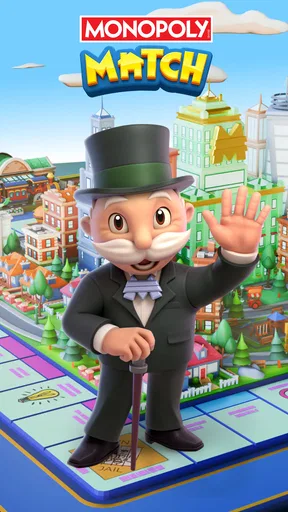
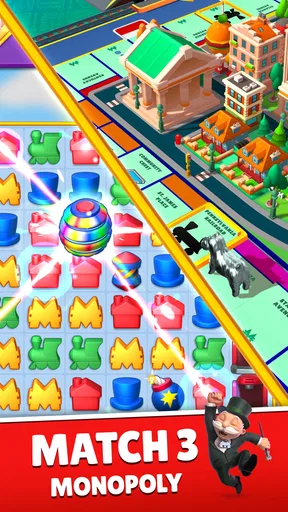
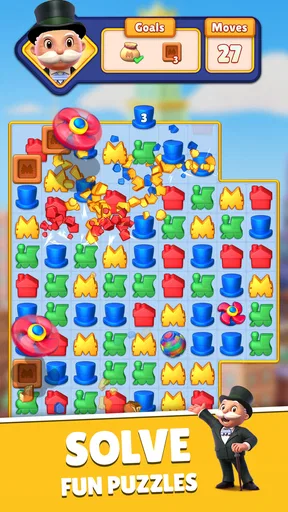
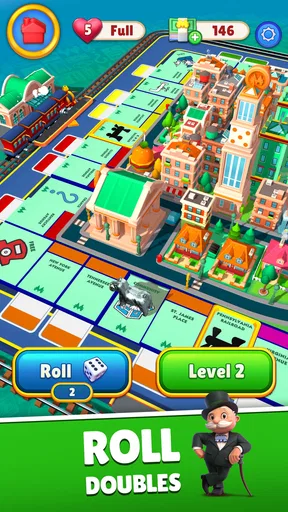
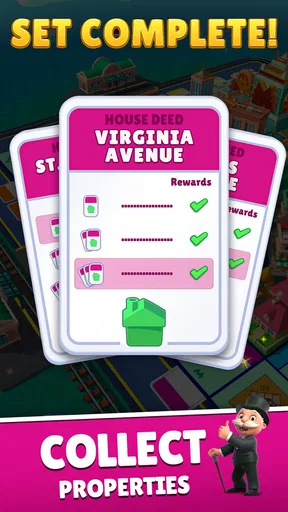
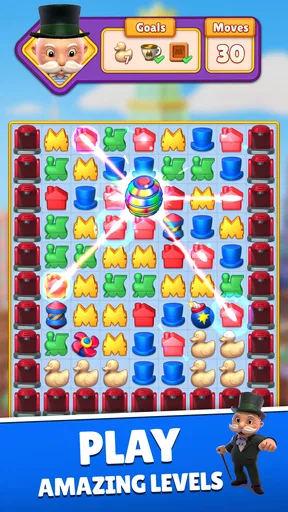
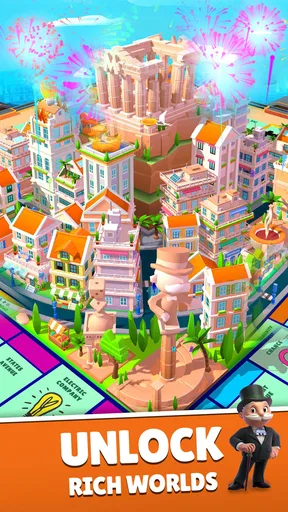
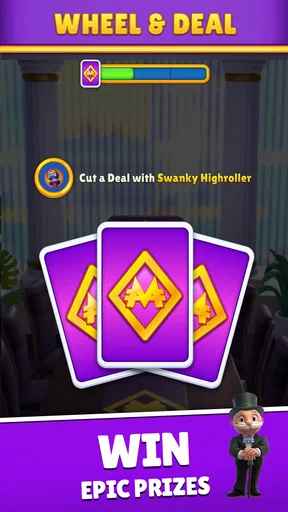
 Analysis by AppCompare
I went into MONOPOLY Match expecting a familiar board-game theme wrapped around a simple puzzle, and that is exactly where its appeal begins. It is a free puzzle game from BeeMatch Ltd that borrows the recognizable Monopoly setting without asking me to sit through a full traditional property-trading session. Instead, it turns the experience into something I can pick up for a brief break, make progress, and put down before it starts demanding a whole evening.
That short-session focus is the most important thing to understand. This is not a direct replacement for playing Monopoly around a table, and it is not trying to be a deep strategy title in the same way as a dedicated board-game adaptation. I found its pleasure in the quick loop: open the game, solve a puzzle, enjoy a little themed progression, and leave when real life calls. For players who want an approachable mobile game with a familiar identity, that balance works surprisingly well.
Why the first few sessions feel so easy to enter
The strongest part of my first impression was how little effort the game seemed to require before the fun started. The Monopoly presentation gives the puzzle a clear personality, while the basic match-style format is easy to understand even if I only have a few minutes available. I did not need to study a large rulebook or learn a complicated control scheme. The game communicates its immediate purpose quickly, which matters a lot on a phone.
That accessibility also explains its Everyone content rating. Families can approach it without the heavier tone found in many competitive or action-focused mobile games, and adults who normally avoid complicated games can understand the central activity almost immediately. I would still treat it as a casual entertainment app rather than a substitute for a shared family board-game night, because the social experience and the tactical depth are very different.
The familiar branding helps the opening, but it is not enough by itself to carry the whole experience. What kept me playing was the combination of recognizable visual flavor and small, manageable puzzle decisions. I could look at a board, identify a useful move, and feel a modest sense of completion without needing to commit to a long campaign in one sitting.
That makes it particularly suitable for waiting rooms, short commutes, or the few minutes before an appointment. In a realistic everyday scenario, I might start a session while waiting for a coffee, finish a handful of puzzle actions, then close the game when my order is ready. The game fits that situation better than a conventional Monopoly match, which usually needs everyone to remain involved for much longer.
Its reception also suggests that the basic concept has found an audience: the game holds a 4.7 average from around 16 thousand ratings, with roughly 2.8 thousand written reviews and more than 100 thousand installs. Those figures do not prove that every player will enjoy it, but they do support my impression that the approachable puzzle-and-board-game mix is landing well with many people.
Worth Reading Before You Choose

Flipboard Shows What News Apps Must Do Beyond the Feed

Switching to Android Auto Means Rethinking Your Driving Routine

Google Calendar Makes a Crowded Week Easier to Manage

Ludo King Makes the Most of the Minutes Between Plans

Baby Panda World Brings Quick Play to Modern Phones, but Its Game Library Feels Busy

ESPN’s Live Game View Makes Following Close Games Easier
A rhythm built for small pockets of time
The session rhythm is where I think the game makes its clearest case. I rarely felt that I had to reserve a large block of time before opening it. A good casual game should let me stop after a small burst without making the interruption feel like a failure, and this one is naturally suited to that habit.
There is a useful difference between a game that is short and a game that is merely shallow. Short sessions can still feel worthwhile when each one gives me a visible result, such as solving a puzzle, moving forward, or reaching a small milestone. The Monopoly theme gives those results more context than an abstract grid would have. Even when the individual puzzle action is familiar, the surrounding presentation helps it feel like part of a larger journey.
I also appreciate that the game does not require me to remember a complicated chain of decisions from one visit to the next. If I return after several hours, I can usually reorient myself quickly. That is a major advantage over strategy games that punish a distracted session or demand that I remember a detailed plan. Here, the mental load is lighter, so the game works when I am tired or only partly focused.
My practical advice is to treat each visit as a small break rather than chasing a long uninterrupted run. That mindset makes the design feel more comfortable. If I expect a large board-game experience every time, the simplified structure may seem limited. If I want a themed puzzle that gives me a compact dose of progress, the same structure becomes its main strength.
What happens when real life interrupts
Interruption tolerance is a quiet but important quality in mobile games. Phones are full of distractions, and I often have to switch away suddenly because a message arrives, a meeting begins, or I simply need to do something else. A game that makes every interruption feel costly quickly becomes tiring, especially when it is marketed toward casual play.
MONOPOLY Match works best when I approach it as an on-and-off companion. Its familiar puzzle format means I do not need a long warm-up after returning. I can look at the current situation, make a decision, and continue without reconstructing a complicated story. That makes it more practical than many narrative or competitive alternatives, where leaving at the wrong moment can mean losing context or momentum.
There is a trade-off, though. The less demanding the game is to resume, the less likely it is to create the intense concentration of a serious puzzle title. Players who enjoy being completely absorbed by difficult logic problems may find this experience too gentle. The game is designed around accessibility and continuity, not around testing the limits of my patience or reasoning.
I would also be careful about playing during moments when I need to be fully attentive, such as walking through traffic or handling a task that requires concentration. “Easy to pause” does not mean “appropriate everywhere.” Its convenience is best used during genuinely free moments, not as an excuse to divide attention when safety matters.
The current version is 0.3.14794, and the game runs on Android from version 9 onward. For someone deciding whether an older phone can handle it, that minimum operating-system requirement is the practical checkpoint. I would check the device’s Android version before planning to install it, especially on a phone that has not received updates for a long time.
The pleasant side of repetition
Every match-style puzzle lives or dies by repetition. The basic action can be satisfying for a while, but eventually I start asking whether the surrounding goals give me a reason to continue. In this game, the Monopoly identity helps soften the repeated structure. The board-game setting gives the activity a sense of place, so the puzzle does not feel completely detached from a larger theme.
That said, the repetition is still visible. If I want every session to introduce a radically different rule or a dramatic new challenge, this is probably not the right choice. Its appeal comes from refining a familiar loop, not from constantly reinventing itself. I found it more enjoyable when I accepted that the pleasure would be incremental: a good move, a bit of progress, and the satisfaction of clearing another small obstacle.
One useful way to avoid fatigue is to play in defined bursts. I might decide to play only until I finish a particular objective or complete a short break, rather than continuing automatically. This keeps the game from turning into background tapping and makes the decisions feel more deliberate. It also lets me notice whether I am still enjoying the puzzles or simply continuing out of habit.
The Monopoly theme is a double-edged sword here. It gives the game a stronger identity than a generic match puzzle, but players who are not interested in the brand may eventually notice that the underlying loop is the main event. In that case, a pure puzzle game with more varied mechanics could offer better long-term value. The themed presentation is most effective for people who enjoy seeing a familiar board-game world attached to casual mobile progress.
How it compares with the usual alternatives
Compared with a traditional Monopoly app, this game is easier to enter and much easier to leave. A classic property-trading session depends on turns, negotiation, and a longer chain of decisions. That can be more rewarding for players who want the full board-game experience, but it is less convenient when I only have a few minutes. MONOPOLY Match favors immediate activity over a complete recreation of the tabletop format.
Compared with a standard match-three puzzle, it has a clearer personality. Many puzzle games can feel interchangeable when their boards and progression systems are stripped of context. The Monopoly setting gives this one a reason to feel distinct, particularly for players who already recognize the visual language of the board game. The compromise is that someone seeking pure puzzle variety may prefer a title built around more complex board rules rather than a licensed theme.
It also differs from competitive multiplayer games because the experience is more forgiving of irregular attendance. I do not need friends to be online at the same time, and I am not placing my performance directly against another person in every short session. That makes it a better fit for relaxed solo play, while players who need social rivalry may find it too quiet.
For children and families, the Everyone rating makes the game approachable, but parents should still remember that free mobile games can include optional spending. The listed in-app purchases range from $0.99 to $99.99 per item. I consider that the most important practical caution before handing the phone to a child: the game itself is free, but purchase controls should be handled deliberately rather than assumed away.
Where the free model changes the experience
The free entry point is a genuine advantage. I can try the core idea without paying first, which makes the decision simple for anyone who is curious about the combination of Monopoly flavor and puzzle play. It is also useful for households where several people want to test the game before deciding whether it deserves regular space on their phones.
At the same time, optional purchases can influence how comfortable the experience feels over longer periods. Even when I do not buy anything, the presence of purchasable items can change how I evaluate progress, especially if I begin to feel that the game is encouraging me to spend rather than simply play. That is not a reason to dismiss it automatically, but it is a reason to set a personal boundary before getting invested.
My preferred approach is to decide in advance that the free version is the complete trial. If the normal rhythm remains enjoyable without spending, the game has earned its place as a casual pastime. If I find myself considering a purchase mainly because I am impatient or tired of waiting, I would stop and ask whether the underlying puzzle is still giving me enough pleasure. That small check prevents a free game from becoming an unplanned expense.
The price range also means this is not equally suitable for every player. Someone looking for a one-time purchase with a completely fixed experience may be happier with a paid puzzle game. Someone who prefers trying a game at no initial cost, accepts optional purchases, and enjoys a familiar theme will find the model easier to live with.
Who will get the most from it
I would recommend this game to players who want a low-pressure puzzle for short visits, especially those who like Monopoly’s atmosphere but do not want to commit to a full property-trading match. It is a good candidate for casual players, families looking for an accessible phone game, and adults who want something more recognizable than an anonymous puzzle board.
It is also a sensible choice for people who frequently play in interrupted environments. If my gaming time comes in scattered pieces rather than long sessions, the straightforward format works in my favor. I can return without needing to remember a complex strategy, and I can stop without feeling that I have abandoned an important multiplayer commitment.
I would skip it if my priority is deep strategic planning, demanding logic, or a complete digital recreation of Monopoly’s negotiations and property management. I would also look elsewhere if I dislike branded themes or if I know that optional purchases make free-to-play games stressful for me. A more focused premium puzzle would probably be a better match in those cases.
Another group that may want to be cautious is anyone who tends to keep playing simply because progress systems are present. The short-session design makes it easy to begin, but easy access can become a drawback when I am using the game to fill every spare second. The best experience comes when it remains a deliberate break rather than an automatic reflex.
My casual verdict after living with the loop
What I like most about MONOPOLY Match is its clarity. It knows that a phone game does not always need to deliver a huge adventure. Sometimes I want a recognizable setting, a puzzle I can understand quickly, and enough progress to make a brief session feel worthwhile. This game delivers that combination more effectively than a traditional board-game adaptation would in the same amount of time.
Its limitations are equally clear. The repeated puzzle structure will not satisfy everyone, and the Monopoly theme cannot replace deeper mechanics for players who want serious strategy. The free-to-play structure also deserves attention, particularly for families and anyone who prefers a fixed-cost experience. Those are not minor details; they shape whether the game remains relaxing over weeks rather than merely entertaining during the first few sessions.
Still, I think the balance is fair for its intended audience. The game is free, rated Everyone, and developed by BeeMatch Ltd, with a low barrier to entry for Android users running version 9 or later. I would start with short sessions, keep spending controls in mind, and judge the game by whether its small moments of progress continue to feel pleasant rather than by how long it can keep me playing.
My recommendation is simple: try it if you want a Monopoly-flavored puzzle that fits around everyday interruptions, not if you are searching for the full tabletop experience or a demanding strategy challenge. Its best quality is not endless depth; it is the ability to provide a neat, familiar burst of play and let me leave without making the break feel complicated.
Pros
- Familiar MONOPOLY theme with colorful
- polished visuals
- Match-3 levels are easy to learn but become increasingly challenging
- Frequent events and challenges add variety beyond the main levels
- Collectible boards and characters provide satisfying long-term goals
- Playable in short sessions
- making it convenient for mobile gaming
Cons
- Lives limit how long you can play continuously
- Some levels rely heavily on luck and may require repeated attempts
- Progress can feel slow without using boosters or extra resources
- The game includes frequent offers and prompts for in-app purchases
- Requires an internet connection for most features and progression
FAQs for MONOPOLY Match
What is MONOPOLY Match, and how is it different from a traditional Monopoly game?
MONOPOLY Match is a mobile puzzle game that combines match-3 gameplay with the familiar MONOPOLY universe. Instead of moving around a board and negotiating property trades, you match colorful pieces to complete levels, earn rewards, and progress through themed locations. The game focuses on quick puzzle rounds, building and upgrading areas, collecting items, and unlocking new content rather than full board-game strategy.
Is MONOPOLY Match free to download and play?
Yes, MONOPOLY Match is generally free to download on Android and iOS devices. However, it includes optional in-app purchases that can provide extra lives, boosters, coins, or other resources. The game can be enjoyed without paying, but progress may feel slower when you run out of attempts or encounter particularly difficult levels. Parents should also review purchase settings before allowing children to play.
Does MONOPOLY Match require an internet connection?
MONOPOLY Match may allow limited gameplay in certain situations without a stable connection, but an internet connection is normally recommended for the complete experience. Online access can be needed to synchronize progress, receive events, claim rewards, display advertisements, and use social or competitive features. Availability of offline functions can vary after updates, so players should not rely on the game as a fully offline title.
Is MONOPOLY Match suitable for children and casual players?
MONOPOLY Match is easy to understand and suitable for casual players who enjoy short, colorful puzzle sessions. Its simple matching mechanics make it accessible, although later stages can become challenging and may encourage the use of boosters or additional attempts. The app may also contain advertisements, promotional offers, and optional purchases, so parents should supervise younger players and enable device-level purchase restrictions when appropriate.
What are the main advantages and disadvantages of playing MONOPOLY Match?
The main advantages are its approachable match-3 mechanics, recognizable MONOPOLY presentation, satisfying progression system, frequent rewards, and short sessions that work well for mobile play. On the other hand, the experience relies on limited lives, random puzzle layouts, advertisements, and optional purchases. Difficulty can also increase noticeably, which may frustrate players who prefer completely predictable progress or a traditional Monopoly board-game experience.


